On 14 September I came second at the Youth Startups Grand Final with Sidequest, a product that had not existed two weeks before. It was the second time that summer I had finished second on the programme, after coming second with Voluble in June.
A third go
Youth Startups is run by Bae HQ, which Amardeep Parmar and Gurvir Riyat set up for founders of Asian heritage. It takes Year 12 students from state schools, puts them in teams of about four and gives them a week to find a problem, build something and pitch it, and the best teams from across the summer come back in September for a Grand Final.
I did the June cohort and built Voluble, which came second, and was invited back in August to build Lumi, which came fourth, but neither of those was enough to get me into the final.
A week after the August cohort finished, Amar emailed round to say that the strongest people from the teams that had not won could apply to a wildcard group and go into the final as the underdogs. Every other team had been working on its idea for between one and three months and we would have less than two weeks, but I applied anyway and was accepted.
The line I took from Russ's It's All in Your Head was to stop waiting to be picked, and after not being picked twice that summer, the wildcard was the first time the decision was entirely mine to make.
The group chat
The idea was mine, and it came from something everyone my age will recognise: someone in the group chat says we should do something, a few people agree, someone asks where, and then nobody replies until the next time someone says we should do something.
The problem is not that there is nothing to do, but that wanting to do something so rarely turns into an actual plan with a time, a place and a group of people who are definitely coming.
Venues have the opposite problem, because go-karting tracks, golf ranges, bowling alleys and cinemas are built for their busiest hours and spend most of the week well below them. A Tuesday afternoon at a karting track is mostly empty track that has already been paid for.
Sidequest was built to sit between those two problems, connecting young people who have the time but no plan with venues that have the space but nobody using it.
Ten days
The team was put together for the wildcard: Usman, me and two other students, with Trinity as our mentor. I came up with the idea, wrote all of the code and led the team, although Amar gave the CEO title to someone else. He had told me before that I can be too dominating on a team, and a bit harsh with it, and giving the title to someone else was his way of balancing that out.
It is fair feedback, and I have thought about it a lot since. Steve Jobs was pushed out of Apple in 1985, the company he had started, after the board sided with John Sculley, the CEO he had hired himself, and most accounts put that down less to his standards than to the way he held other people to them. I would much rather hear that about myself from Amar now than learn it from a board later on.
Amar's own book, Startups for Outsiders, which I am about halfway through, argues that the skills a team starts with matter less than what each person is willing to learn, and ten days with people you have only just met is about as direct a test of that as you can get.
What we built
The student side is a swipe app, except that you swipe on plans rather than people. Each card is something happening near you, like karting on Thursday at half six, bowling, crazy golf or a film with food after, and you swipe left if it is not for you and right if you would go. It uses where you are, what you like and what you have said yes to before to decide what to show you, and when enough people swipe right on the same plan they become a group of up to five, with a chat that opens for that plan and goes quiet once it is done. Paid plans take a small deposit, so that saying yes actually means something.
The other side is for venues, and for them I built a dashboard that shows a venue its bookings, its audience and how its campaigns are doing, with an agent called Simon built into it. Most dashboards give you a panel of numbers and leave you to work out what they mean, whereas Simon reads the venue's own numbers, like when it is quiet, who is coming and what has worked before, and tells it what to do next: a discount on a dead afternoon, an event, a partnership or a social campaign aimed at the hours that are empty.
Simon works its findings out from the numbers first and only then has the model write them up, so if the model is unavailable it still gives the same advice, just less nicely worded. I built it that way on purpose, because an analyst that invents things is worse for a business than having no analyst at all.
Who pays
We surveyed over a hundred students, and 97% said they would use it and 79% said they would use it to meet new people, but 84% said they would not pay for it. That settled the model, with students staying free and venues paying, since venues are the ones with something to gain from a full Tuesday afternoon.
The plan for getting started was borrowed from companies that had done it before. Facebook started at a single university before it went anywhere else, Uber spent heavily to make its first rides cheap enough to become a habit, and PayPal paid people cash to sign their friends up. Sidequest does the same things on a smaller scale, starting in East London, subsidising the first plans so that groups actually fill and paying cashback on referrals.
Usman got us in front of the CEO of Topgolf UK, who he knows from the gym. He liked the idea and said he wanted Topgolf to be the first venue on the platform.
In the pitch we asked for £115,000 for eighteen months of runway, with none of it going to the founders until month seven, and only once the product was live.
The night
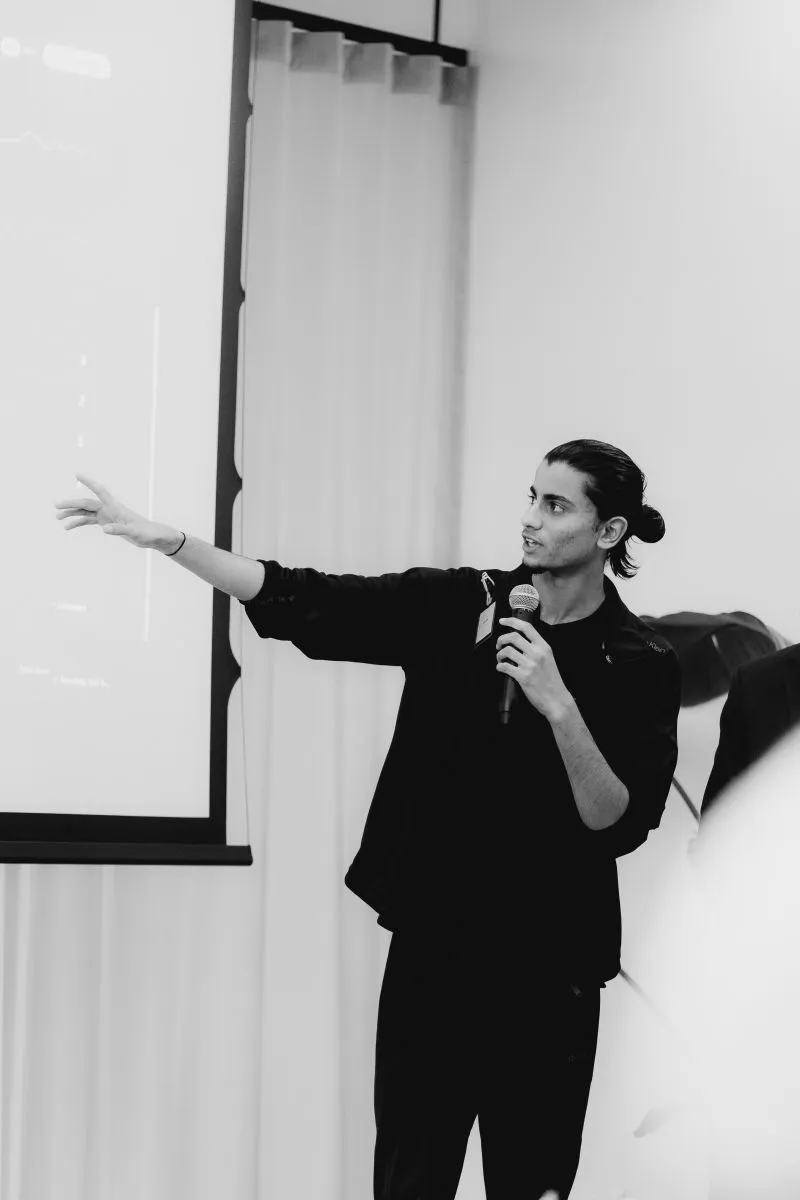
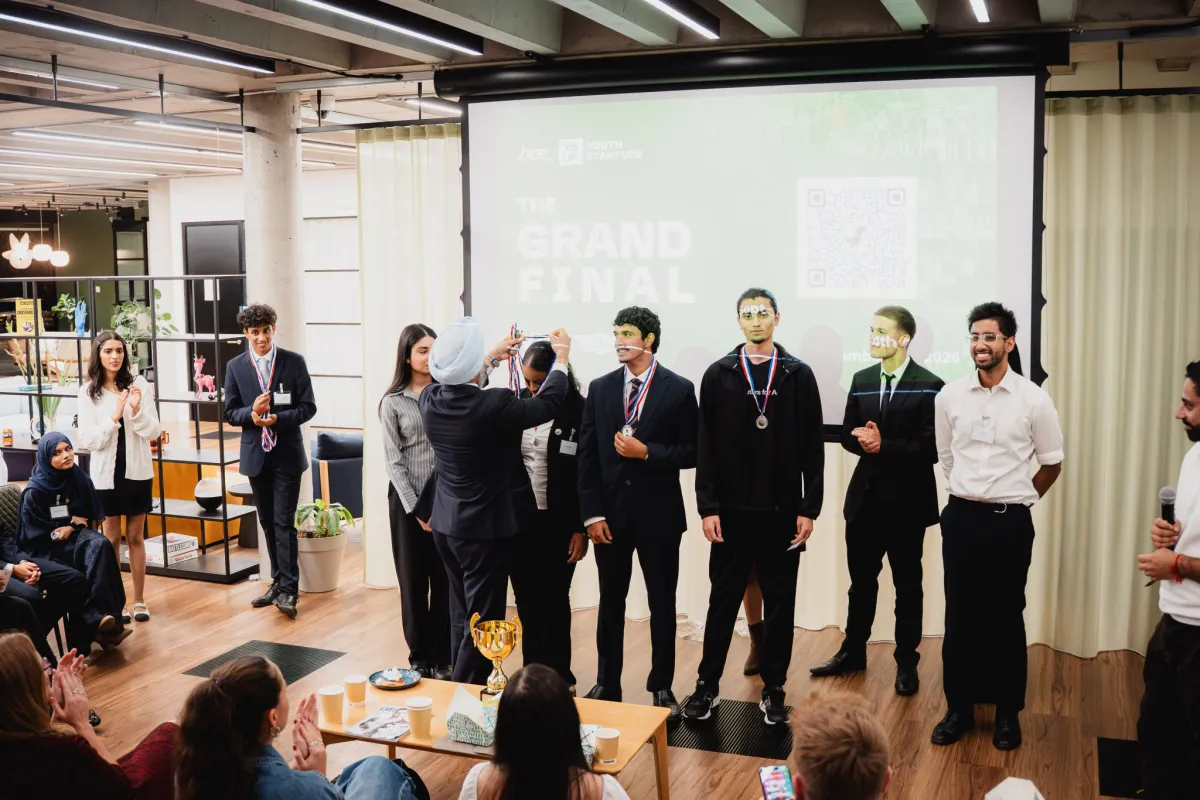
The final was at VaynerMedia in London, and every team had four minutes to pitch and two minutes of questions. The judges, who included Aashna Kumar, Aengus Boyle, Holly Simmons, Jas Athwal, Lauren Crawley-Moore and Narinder Patti, sat on a yellow sofa at the front with the rest of the room on tiered seating behind them.
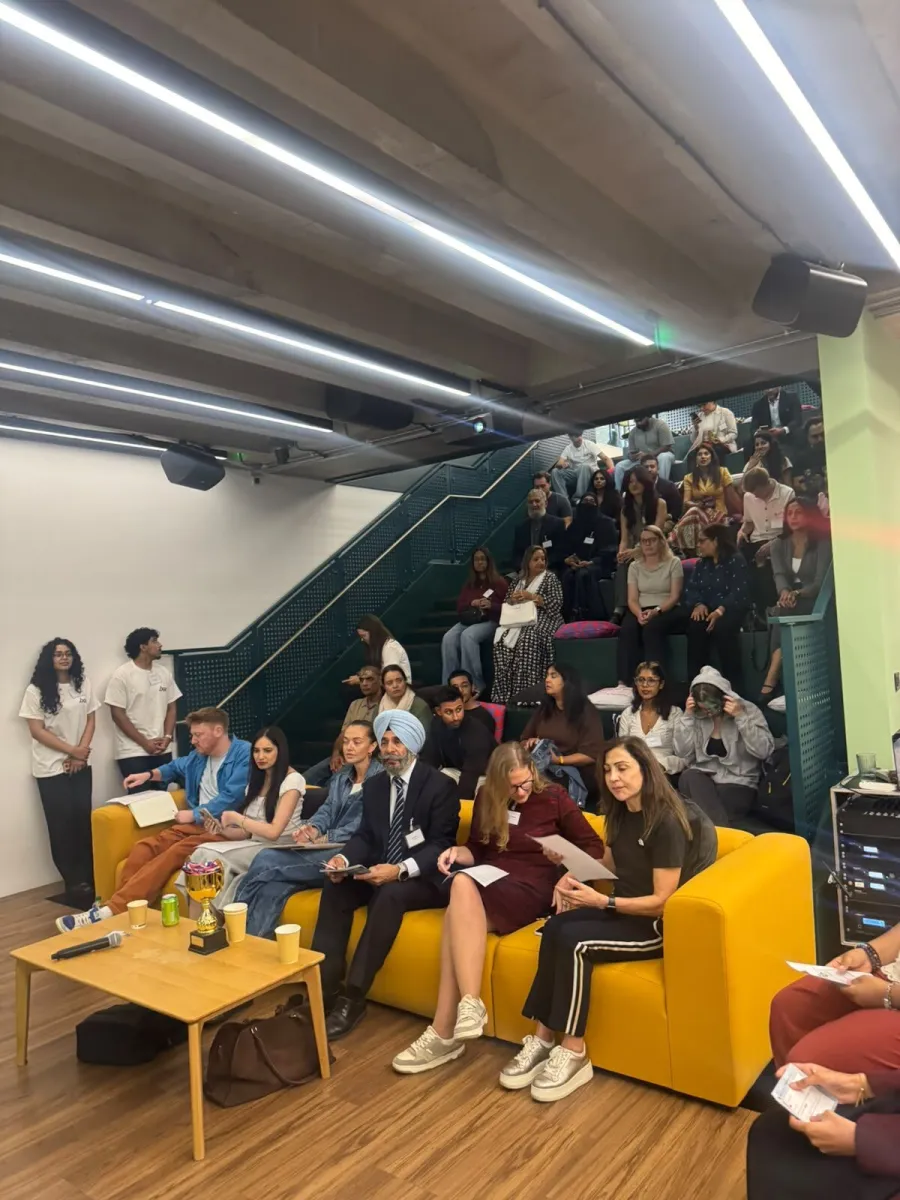
We opened on a group chat, because it is the same one everyone in that room has been in at some point.
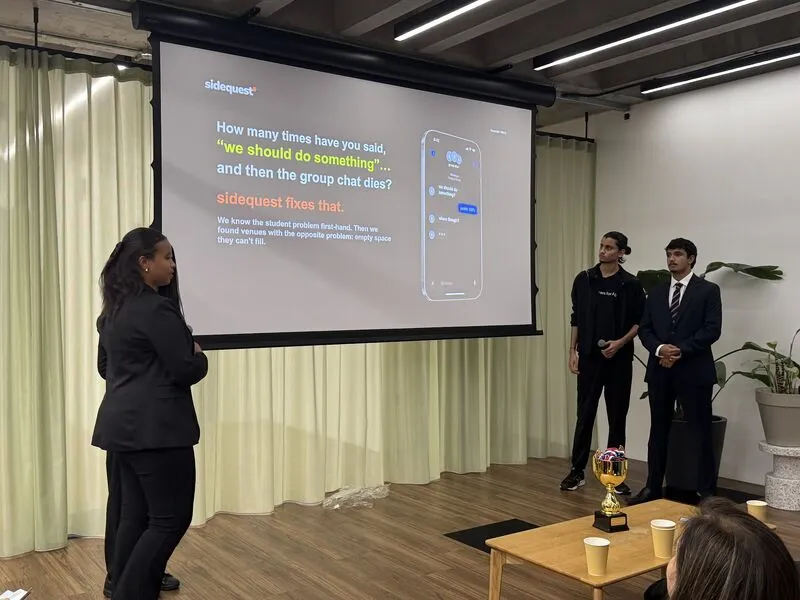
The demo was two videos, one of the student app and one of the venue dashboard, and I talked over both of them live. My notes for that slide had a whole paragraph on what to do if the videos would not play, which in the end I never needed.
I could not tell you now exactly what the judges asked, but I do remember how much of the answer we had already written down. The speaker notes had a source for every tick on the competitor slide in case anyone challenged one, along with the line to lead with, which was that everyone else helps you find people and we are the only one built to send venues paying customers. Startups for Outsiders makes the same point when it says you want to be the only logical choice rather than the better of several.
The result
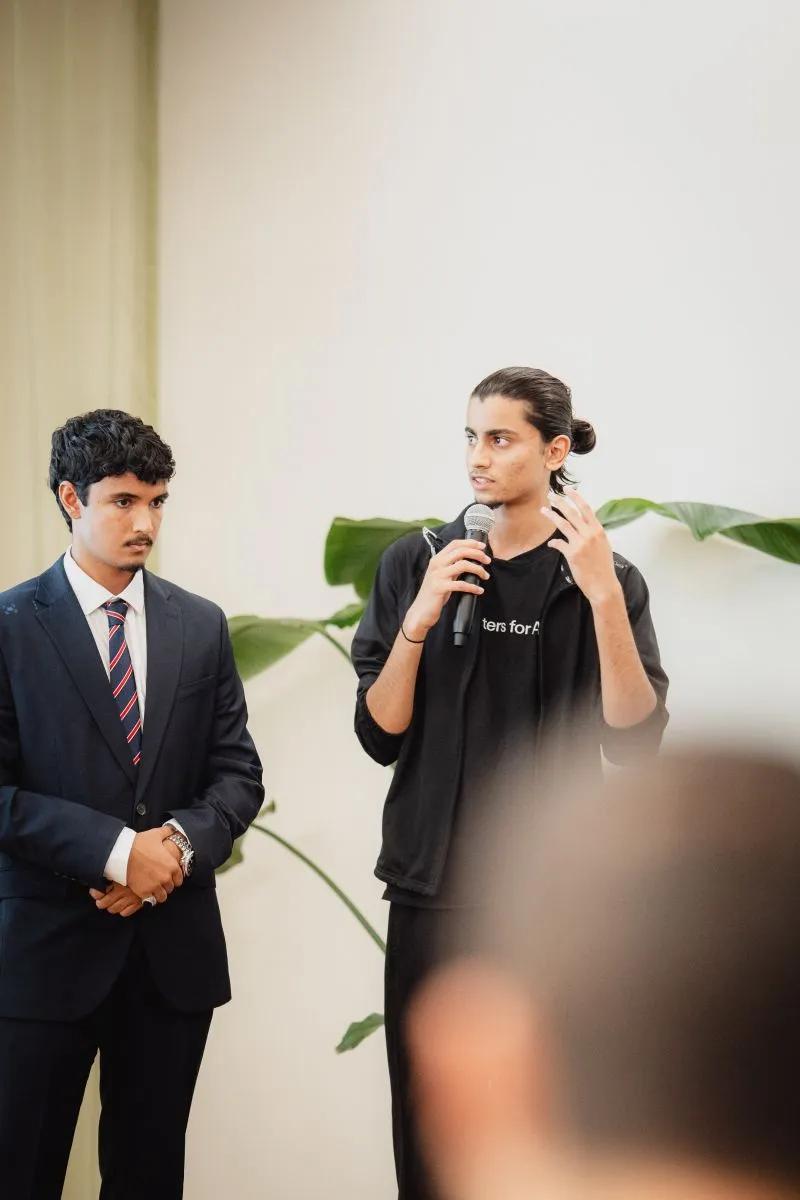
Knowva won with a tool to help students decide what to study, and FoodLocker came third.
We went in believing we could win, and I still think we had the strongest case in the room: a working product on both sides of the marketplace, an AI analyst for venues, real students already signed up, the CEO of Topgolf UK wanting to be our first venue and a costed plan for the money. All of it was built in ten days by a team that had been brought in as the underdogs, against teams who had been working on their ideas since the start of the summer, and that is a result I am proud of.
Jas Athwal, the MP for Ilford South, put the medals round our necks at the end of the night.
The two hours after
After the results everyone went for the Wingstop, and while we were eating I ran into Talvin Ramnah, the CEO of Bleep64, who I interned for over the summer, and we ended up talking for the whole of the two hours that were left.
I also met Nilesh B. Dosa, who founded icanyoucantoo, a mentoring programme for 16 to 21 year olds. He saw the name on my badge and recognised it, because a few weeks earlier I had asked him for a call as an investor, and we ended up having that conversation in person instead.
What happens now
There are 428 people on the Sidequest waitlist now, and Usman and I are in talks with a VC fund about carrying it on, while the other two have decided not to continue with it.
The problem has not gone anywhere either, because somewhere tonight a group chat will agree that it should do something, and without something like Sidequest to turn that into a plan, nobody will end up booking anything.