Lumi
Started October 2026. I add to this whenever something big happens.
I'm building the AI that grows up with your child. Lumi, a tutor for GCSE and A level students, is the first version of it. This is why, and everything that's happened so far.
The shed
I'm the only son and I was homeschooled, so I didn't have a lot of friends growing up. What I had was the shed at the bottom of the garden. I spent hours in there every day with Lego and RC cars. When I was 11 my dad got me a Raspberry Pi, and I wired it up to an antenna and some other random bits until it beeped whenever a plane flew overhead within about five miles.

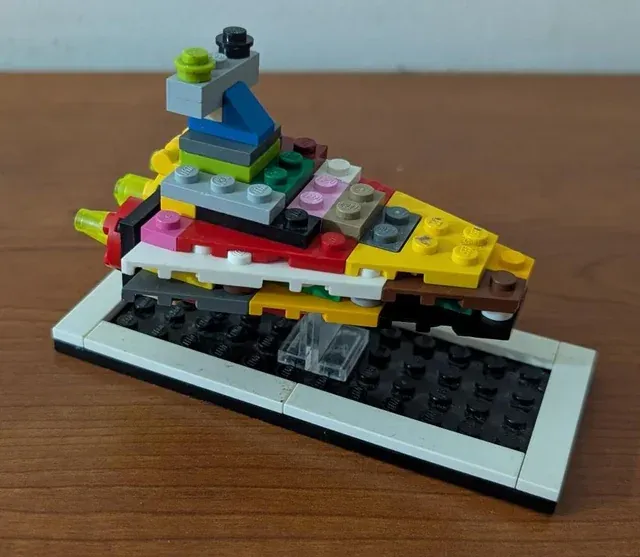
My mum taught me everything. By the time I started secondary school she'd got me to roughly a high school level in physics and maths, and she never once did it the way a school would. She taught me forces using a Lego Star Destroyer I'd built. I learned it because it was about something I already cared about.
I didn't know it then, but that's about as good as education gets. In 1984 Benjamin Bloom found that students taught one to one by a tutor did two standard deviations better than students taught in a normal class. The average tutored student beat 98% of the class. And it isn't only the one to one part. When Candace Walkington rewrote algebra problems around what students were actually into, with the maths kept exactly the same, they got better at the maths.
I had both, my whole childhood. Almost nobody does.
What Lumi is
You talk to Lumi out loud. You can attach the past paper or a photo of your working, and it explains things while drawing on a whiteboard in front of you.
One to one online tutoring had already done a lot for education. Nobody has to travel any more, and over Zoom you can get a brilliant tutor from another country for a lot less. Lumi copies what already works. The whiteboard is there because that's how good tutors actually teach.
You can interrupt it, the same way you'd put your hand up. In my experience students are embarrassed to stop a teacher and say they don't get it. Nobody's embarrassed in front of an AI, so they actually ask.
And it teaches through what you're into, because that's what kept me hooked, and it's what keeps any student engaged.
What I actually believe
Almost everyone I talk to thinks learning is the one thing that needs a human. I think they're wrong.
AI is getting better and more human every month. Personal AI is already here: Muse and Instinct do the job a personal assistant used to. It's inevitable that someone builds one that grows up with a child the same way. I want that to be us. Lumi is the wedge: a tutor first, then the AI that knows your kid, remembers them and grows with them.
At YC London a uni student told me that sounded dystopian. I don't think it is. Think about what happens next.
Someone to talk to. The hardest years of your life are the ones where you least want to talk to anyone. Having someone, or something, that actually knows you, that you trust, and that you don't feel awkward telling difficult things, helps you sort out what's going on in your head.
Education is a privilege again. At the Ivy League and places like Stanford and MIT, more students come from the top 1% of families than from the entire bottom half. Only about 4% come from the poorest fifth. Families with money buy better education, and the honest truth is that state education isn't good enough. It treats students like a number: one teacher, a class of thirty. To the people who told me learning needs human connection: what good is human connection when it's split thirty ways, isn't personal to you, and doesn't give a shit about you?
Work changes. I think Musk is right that AI brings universal high income. Right now life goes born, school, career, family, retire, dead. Take away the career, the part that takes up most of your life and shapes everything else, and what's left? No purpose. People get depressed.
Unless they find the thing they were made for. I think everyone comes into the world as a master of one specific craft. As Naval puts it, find what feels like play to you but looks like work to others. Everyone has that thing. They just have to find it.
Now imagine school didn't teach generic BS. Imagine every student's learning was built around their thing from the start. You'd get a different world. Happier people, more fulfilled. World-class actors, artists, dancers, musicians, writers, technologists, potters, entrepreneurs. Pretty much everyone working for themselves, if they work at all. That's where humans should be, and the soul-crushing jobs in accounting and finance should disappear. Get on the Tube at 8am and look around. You won't see a lot of fulfilment.

There's an old story, usually told about a Mexican fisherman. The earliest version is Heinrich Böll's, from 1963. A banker on holiday finds a fisherman relaxing in the afternoon and tells him to work harder: buy more boats, build a company, sell it and retire rich. And then what? Then you can relax by the sea and fish in the afternoons. The fisherman points out that's what he's doing already.
Meaning isn't chasing money. Chasing it will only make your life worse. Work out what you want your life to feel like, then live that life.
In five years
I want Lumi used by at least 50 million children. Not just as an education tool, but as something that helps them grow up: it follows what they're into, remembers them, grows with them, and gets them through the hard parts.
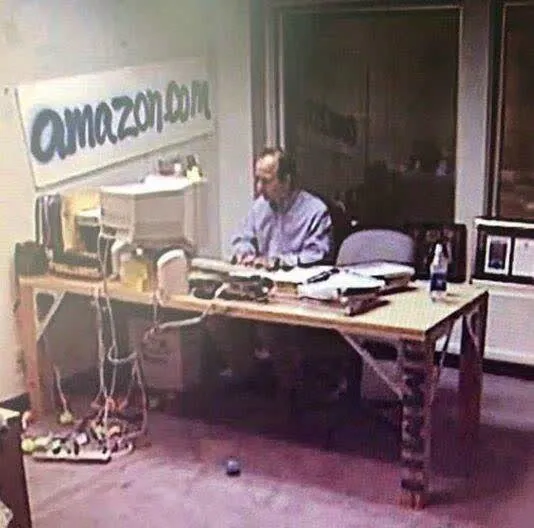
Fifty million sounds mad coming from a shed. Amazon started at a desk made out of a door.
The log
August 2026. Built Lumi in a week on the Youth Startups August cohort and launched it.
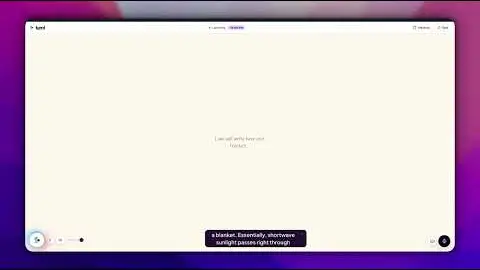
The first version, a few days after launch:
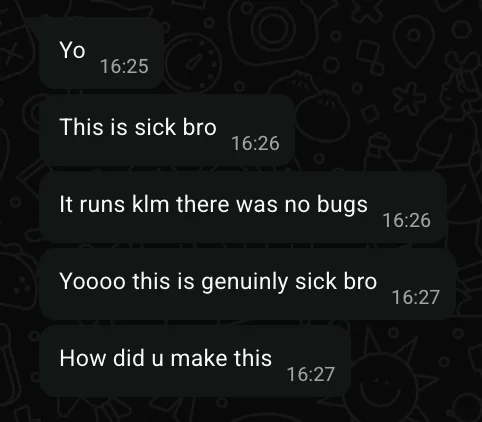
A few of the first messages I got:
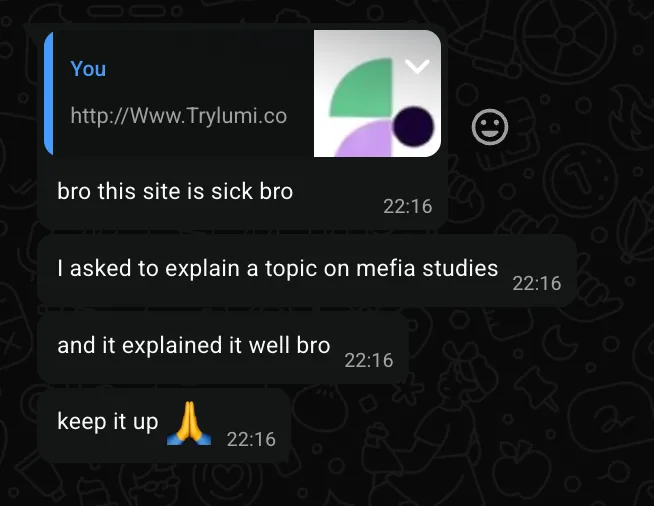
Late September. Turned it off. It was costing me about £30 a day in API calls for Gemini alone, and the rest of the infrastructure kept getting rate limited. Students and friends kept asking what happened. Honestly, it was depressing. It felt like losing all the momentum I'd built, and being bootstrapped there was no investor cheque to fall back on.
So I sold a website to a local law firm and used the money to pay for a year of the infrastructure. Then I applied to Claude Startups.
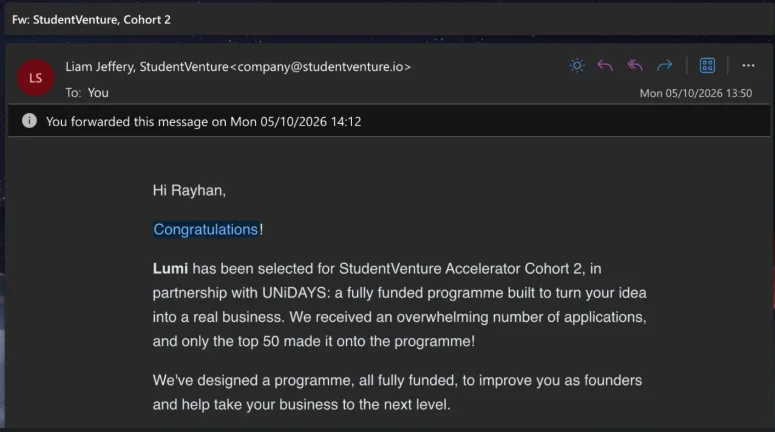
5 October. Lumi got into StudentVenture's second cohort: fully funded, run with UNiDAYS, 50 founders picked from thousands of applications.
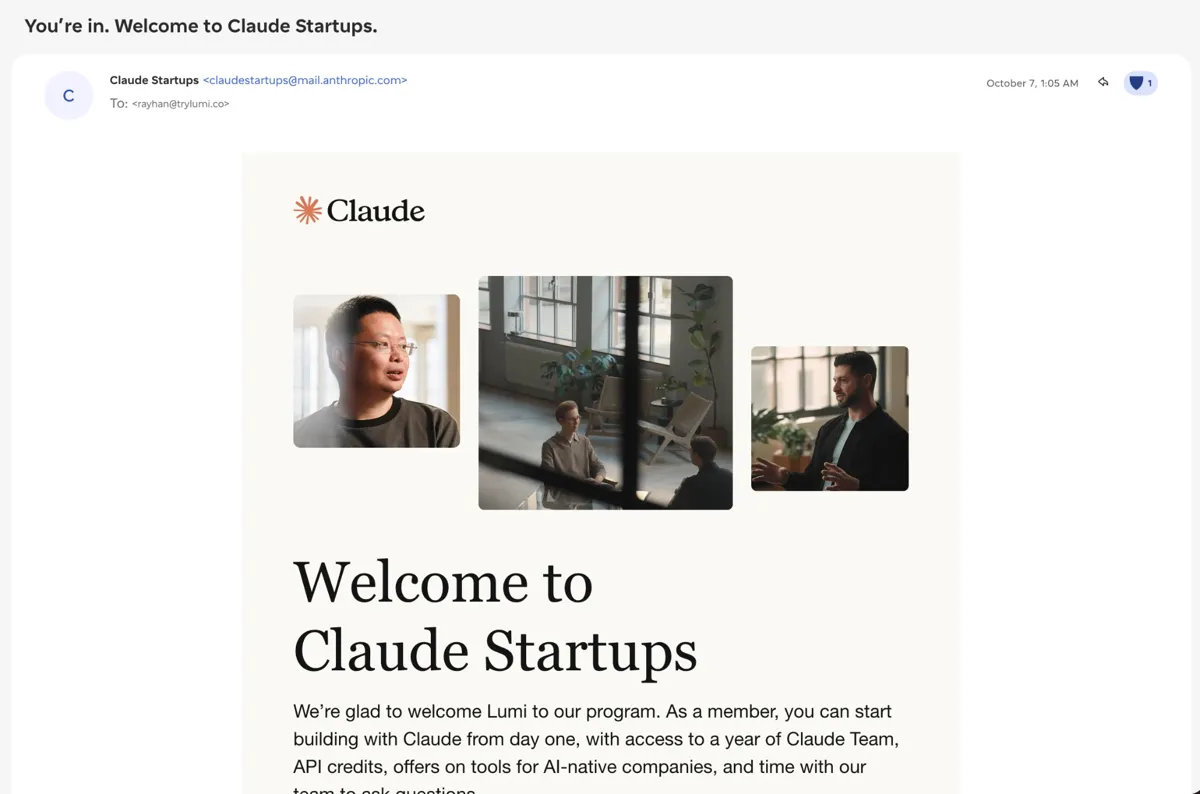
7 October. Accepted into Claude Startups.
9 October. Offer gone. They'd underestimated demand and were re-reviewing everyone, including people they'd already approved.
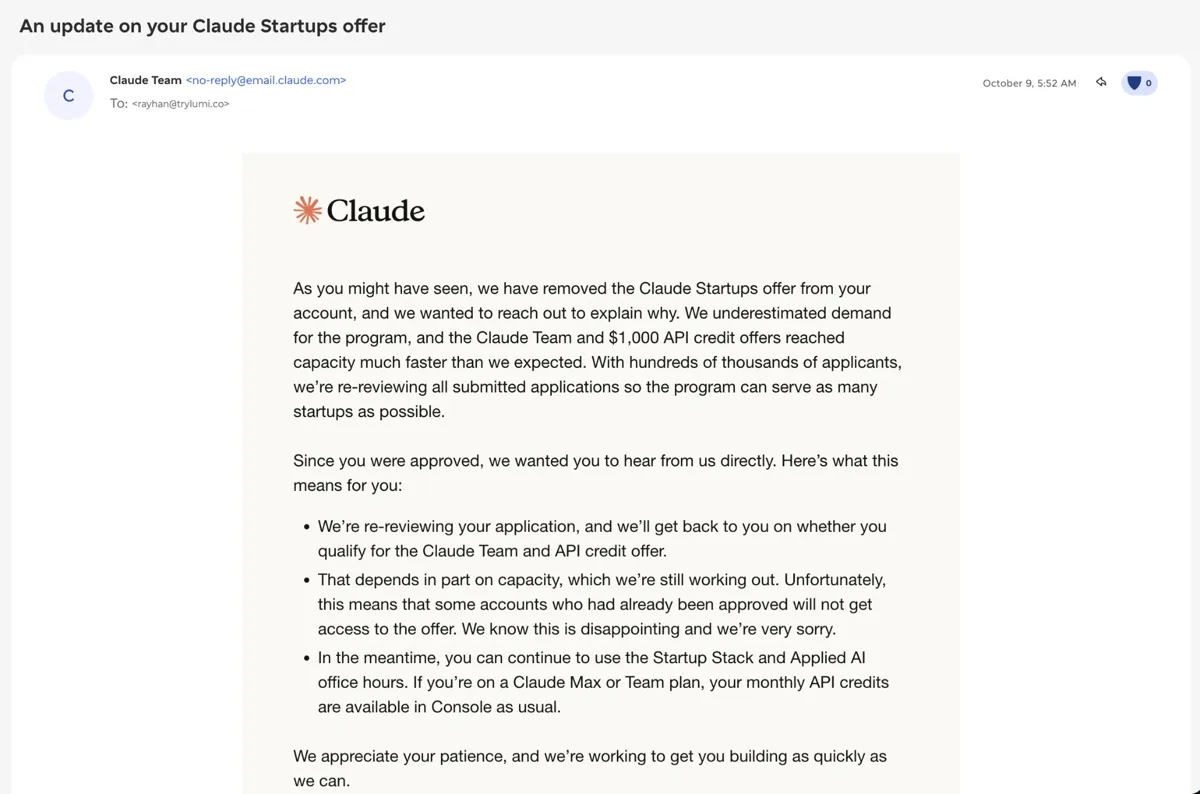
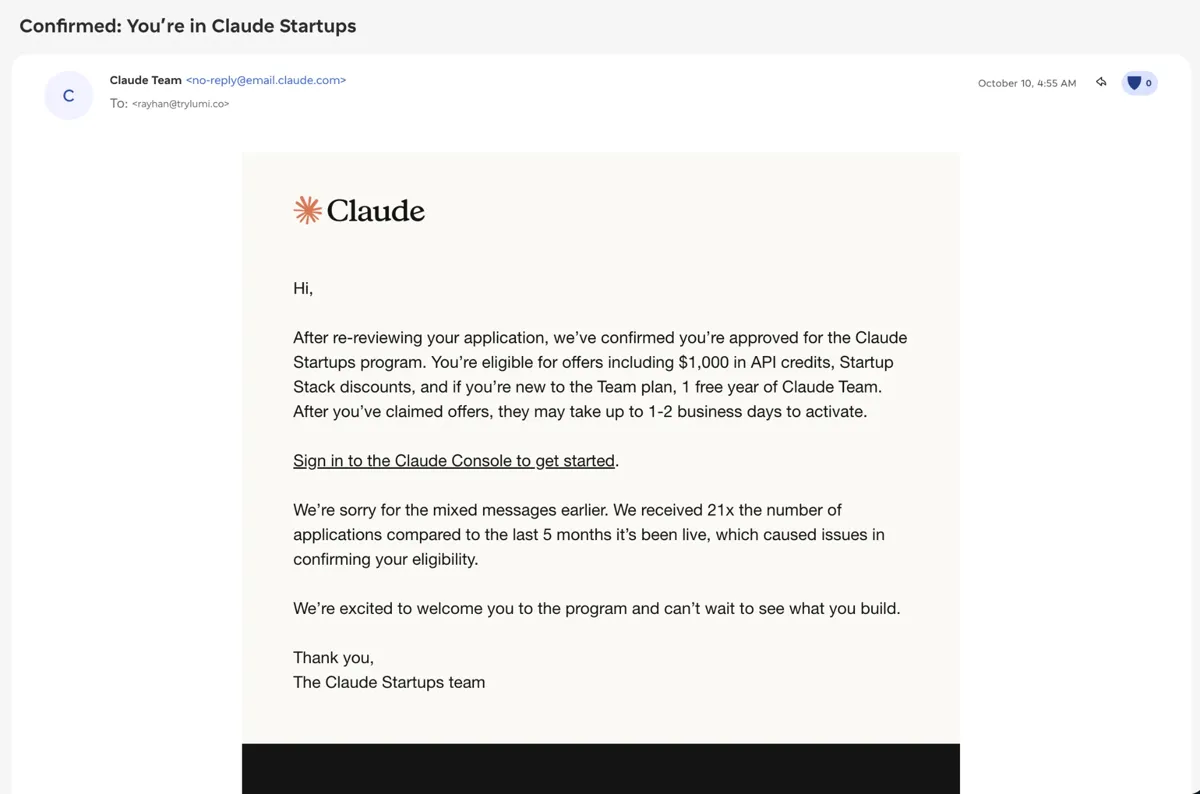
10 October. Back in. They'd had 21 times the usual number of applications. $1,000 in API credits and a year of Claude Team with four premium seats, which are basically Max plans. Holy rollercoaster. It meant I could cancel my £90 a month Claude Max plan and my $200 a month Devin plan, and run everything on those four seats until I find a co-founder to share them with.
October. Applied to YC. At YC London I snuck backstage after the talks to ask Diana Hu and Gustaf Alströmer to read my application before security took them away.